
Modern fabrication relies heavily on mechanical accuracy. Among the key processes that define the strength and functionality of metal structures, brake pressing & folding stands out. This method of forming sheet metal is central to manufacturing parts for industries such as construction, transport, agriculture, and manufacturing.
At the core of its value is precision. Precision ensures consistency, structural integrity, and reduced waste. Without accurate folds and bends, even a minor flaw in angle or alignment can lead to failed assemblies or weakened products. Leading fabrication firms like australian general engineering rely on this process as part of their core service offering, highlighting its significance in shaping metal components built to perform under stress.
This article explains the role of brake pressing & folding, showing how accurate forming techniques support strong, reliable, and cost-effective metal structures across different sectors.
Understanding Brake Pressing & Folding
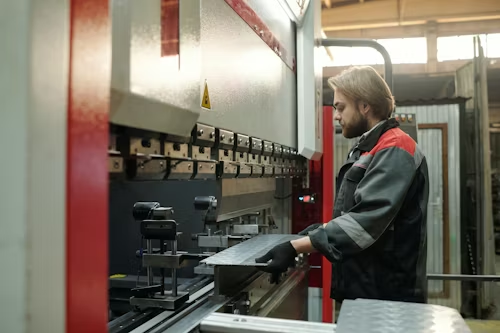
What Is Brake Pressing?
Brake pressing is a fabrication method used to bend metal sheets into set angles using a punch and die. The sheet is placed between these two tools and forced into the desired shape by mechanical or hydraulic pressure. It is widely used for forming boxes, brackets, panels, and support structures.
The type of brake press used—manual, hydraulic, pneumatic, or CNC—affects the level of control and repeatability. Modern CNC brake presses allow for the automation of angle adjustments, stroke depth, and material positioning.
The Folding Process in Metal Fabrication
Folding involves reshaping flat metal by creating creases or folds along specific lines. While brake pressing and folding are often combined or used interchangeably, folding can also be achieved using rotary or panel folding machines. These are especially useful for producing long parts or when handling delicate finishes.
Both processes aim to achieve clean, uniform bends that meet design tolerances without cracking or deforming the material.
Precision in Brake Pressing & Folding
The Importance of Accurate Bending Angles
Precision in brake pressing & folding ensures the correct fit between components. A small deviation in angle can cause parts not to align, leading to failed assembly or unwanted gaps. When multiple bends are required, the tolerance for error becomes even smaller.
CNC brake presses can be programmed to control the bend angle down to tenths of a degree. This is essential in industries where reliability and load distribution matter, such as in mining machinery or structural steel fabrication.
Material Springback and Compensation
After being bent, metal tends to spring back slightly. This is a natural reaction as the material tries to return to its original form. Accurate folding accounts for this springback using software or pre-set compensation values.
The press must slightly over-bend the metal so it settles into the correct final angle. Engineers adjust these values depending on the material type, thickness, and bend radius.
Types of Metals Used in Brake Pressing & Folding
Common Materials and Their Properties
Brake pressing can be used on a variety of metals, each with unique bending characteristics:
- Mild steel offers good formability and is used for structural applications.
- Aluminium is lightweight and corrosion-resistant, though more prone to cracking if over-bent.
- Stainless steel is strong and durable but requires more force and may spring back more.
- Copper and brass are soft and bend easily but are often used for decorative or electrical parts.
Knowing the properties of each metal allows for correct tooling and machine settings, reducing risk of material failure.
Thickness Considerations
The thickness of the sheet affects bend radius, force requirements, and angle accuracy. Thicker sheets need stronger machines and broader tools, while thinner materials require more delicate control to avoid deformation or tearing.
Fabricators must match the material thickness with the correct punch and die combination to achieve optimal results.
Tooling and Setup in Brake Press Operations
Choosing the Right Punch and Die
Tooling selection determines bend quality and repeatability. Different combinations are used based on angle, thickness, and material type. A sharp V-die might be used for small, precise bends, while a wider V-die suits thicker materials.
The tool radius also plays a part. A tighter radius results in sharper bends but increases stress on the material, which can lead to cracking in harder metals.
Setup and Calibration
Before production begins, the brake press must be calibrated. Operators check that the machine is level, the tools are aligned, and the material is positioned correctly. In CNC machines, the program is tested using a sample run to confirm results.
A well-calibrated setup reduces waste and ensures consistent part quality throughout the job.
Advantages of Brake Pressing & Folding
Faster Production of Uniform Parts
One of the main benefits of brake pressing & folding is the ability to produce identical parts quickly. With CNC control, each bend is made to the same specification, even across hundreds or thousands of units.
This repeatability is vital for companies delivering high-volume parts for equipment housings, brackets, frames, and enclosures.
Reduced Material Waste
Accurate folding minimises errors, which in turn reduces material waste. A poorly bent part often cannot be reused, especially when tolerances are tight. By programming the exact force and angle required, CNC brake presses prevent trial-and-error waste.
This also helps keep costs under control and improves project efficiency.
Applications Across Industries
Structural Fabrication
Metal beams, trusses, and framing systems require reliable, consistent bends. Brake pressing ensures these parts perform under load and maintain their shape during installation.
For example, in commercial construction, the quality of steel frames directly impacts the strength and safety of the entire structure.
Manufacturing and Equipment Design
Many machines use custom-shaped sheet metal for housing, protection, and support. Brake pressing is used to form these parts with mounting holes, flanges, or tabs already included.
This process shortens the assembly time, reduces fastener use, and results in cleaner, more integrated designs.
Transport and Automotive
Vehicle chassis parts, supports, and underbody components often require folding and pressing. The strength-to-weight ratio of these parts is essential, and the process allows for forming complex curves and reinforcements without welding multiple pieces together.
Safety in Brake Press Operations
Operator Training and Awareness
Although CNC automation reduces manual handling, operators must still understand the risks. Presses exert large amounts of force, and errors in material placement can cause machine or part damage.
Training ensures safe operation, correct tooling usage, and awareness of machine limits.
Safety Systems and Guarding
Modern brake presses are equipped with light curtains, safety interlocks, and two-handed controls. These systems prevent the machine from cycling when hands or tools are in the way, reducing injury risks.
Safety should always be part of the planning phase, not an afterthought.
Frequently Asked Questions
What is the maximum thickness that can be brake pressed?
The maximum thickness depends on the machine’s tonnage and tooling. Generally, brake presses can handle up to 20 mm thick steel in industrial settings, but this varies based on material hardness and part dimensions.
Can brake pressing be used on coated or painted materials?
It’s possible, but care must be taken. The coating may crack or flake if the bend radius is too tight. Protective films or soft tooling can help reduce damage to the surface finish.
How does brake pressing compare to welding for shaping metal?
Brake pressing is used to form shapes from a single sheet without joining. Welding, by contrast, combines multiple parts. Where possible, folding reduces the need for welds, lowers fabrication time, and results in stronger parts with fewer seams.
Conclusion
The process of brake pressing & folding: how precision shapes strong metal structures highlights the value of accuracy in metal fabrication. From the choice of tooling and material to machine setup and safety, each factor plays a role in producing reliable parts that perform under pressure.
Fabricators that specialise in brake pressing offer key benefits across multiple industries—delivering uniform components, reducing waste, and ensuring structural integrity. Whether it’s for construction frames, machine housings, or transport infrastructure, the importance of this forming technique cannot be understated.
Professionals working with companies like australian general engineering understand that precision is not just about meeting numbers on a drawing—it’s about ensuring that each part fits, holds, and functions as it should in real-world applications. As manufacturing continues to advance, brake pressing & folding remains a fundamental technique in shaping the strong metal structures that support modern life.