
When it comes to tree removal, many homeowners are unsure of what to expect. Whether it’s for safety reasons, to clear space for new landscaping, or to remove a diseased tree, the professional tree removal process is not as straightforward as simply chopping down a tree.
It requires careful planning, expertise, and specific equipment. Understanding the process can make the experience smoother and ensure that the job is done safely.
If you’re wondering what to expect during a professional tree removal process, this guide will provide you with the essential information.
Whether you’re in need of routine tree removal or emergency tree branch removal, knowing the steps involved will help you prepare for the service.
Why Hire a Professional for Tree Removal?
Tree removal is a complex job that requires specialised equipment and knowledge.
While you may be tempted to remove a tree on your own, professional arborists have the expertise to assess the tree’s health, the best way to remove it, and how to manage risks involved with the process.
Hiring a professional ensures that the job is done safely and efficiently, with minimal disruption to your property.
Safety Considerations
One of the key reasons to hire a professional is safety. Removing a tree, especially one that’s large or in a difficult location, can be hazardous.
Professional tree removal services are trained to handle dangerous situations, such as working near power lines or structures, and they are equipped with the right tools to do so safely.
Proper Equipment and Expertise
A certified arborist will have the appropriate tools and machinery, such as cranes, chainsaws, and stump grinders, to safely remove a tree. They also know how to assess the tree’s condition and surrounding environment to determine the safest approach for removal.
Step 1: Initial Tree Assessment and Consultation
The first step in the professional tree removal process is the assessment and consultation. A certified arborist will visit your property to inspect the tree, assess its health, and determine the most effective removal method.
Inspection of the Tree’s Health
An arborist will examine the tree to determine if it is healthy or diseased. Trees that are diseased or unstable may require special care during removal, especially if they are at risk of collapsing.
The arborist will also check the tree’s roots, trunk, and branches for any signs of decay or structural weakness.
Determining the Removal Method
The tree’s size, location, and health will determine how it will be removed. If the tree is close to structures or power lines, it may require a more careful approach.
In such cases, the arborist may use a crane to lift large sections of the tree, or employ a technique called rigging, where branches are removed in stages.
Permit and Legal Considerations
In some areas, tree removal requires a permit, especially if the tree is large or located in a protected area.
The arborist will inform you if a permit is needed and help you with the application process. It’s important to ensure that all legal requirements are met before proceeding.
Step 2: Preparing the Property for Tree Removal
Before the tree removal process begins, the property must be prepared. Proper preparation ensures that the process is carried out smoothly and that the surrounding areas are protected.
Clearing the Area
The area around the tree must be cleared of any obstacles, such as furniture, vehicles, or delicate plants.
The removal team will need enough space to operate their equipment, and it’s essential to keep your property free from potential hazards. If necessary, the arborist will also trim nearby branches that may be in the way of the removal.
Protecting Your Property
The tree removal team will take precautions to protect nearby structures, such as your house, garden, or fence. They may use ropes and tarps to shield property from falling debris.
Additionally, if the tree is near power lines, the removal may require coordination with the utility company to ensure the lines are temporarily shut off or de-energised.
Notifying Neighbours
If the tree is located near a property boundary, it’s a good idea to notify your neighbours. This is especially true if the removal process could affect them, such as blocking access to their driveway or creating noise during the process.
Good communication ensures a smoother experience for everyone involved.
Step 3: Tree Removal Process
The tree removal process itself involves several stages, depending on the size of the tree, its location, and the removal method chosen. Generally, the process can be broken down into the following steps.
Cutting Down the Tree
Once the area is cleared and the proper equipment is in place, the arborist will begin by cutting down the tree. This is done in a controlled manner to ensure that the tree falls in the desired direction.
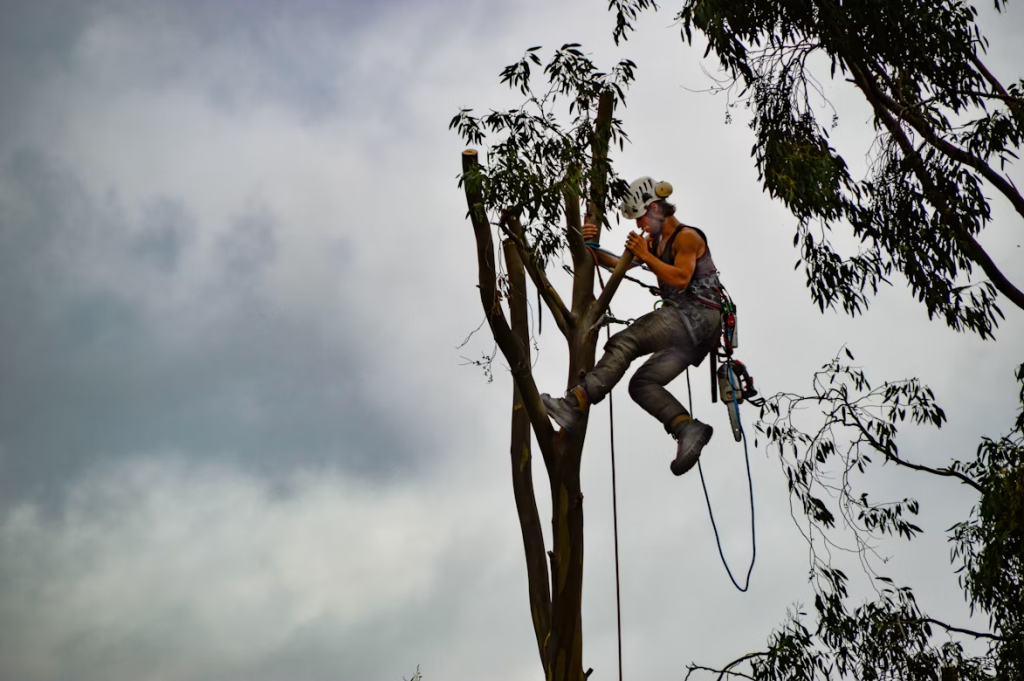
For larger trees, the arborist may use a climbing harness and ropes to carefully lower branches before felling the trunk. In some cases, if the tree is in a dangerous position, they may use cranes to lift large sections of the tree to avoid hitting nearby structures.
Handling Branches and Wood
As the tree is cut down, the arborist will systematically remove the branches and large sections of the trunk.
The process of cutting and removing branches may involve the use of a wood chipper to turn smaller branches into mulch. This helps in keeping the yard clean and may be used for future landscaping projects.
Stump Removal
After the tree has been felled, the stump remains. Stump removal is often part of the tree removal process, but it can be an additional charge.
Stumps are typically removed through stump grinding, where a machine grinds the stump into small chips below ground level. This process helps prevent regrowth and makes the area suitable for planting new vegetation.
Disposal of Tree Waste
The final step in the tree removal process involves the disposal of the tree waste. The arborist may offer a disposal service, which includes hauling away the tree’s wood, branches, and debris. If requested, they may leave wood chips or logs for your use in landscaping.
In some cases, parts of the tree may be recycled, especially if it’s of high-quality wood suitable for construction or furniture.
Step 4: Post-Removal Cleanup and Restoration
Once the tree has been removed, the arborist will conduct a thorough cleanup of the area. This ensures that your property is left in good condition and free from tree waste.
Yard Cleanup
The removal team will clean up any remaining debris, branches, or sawdust left from the process. This includes removing any wood chips or leaves that might have fallen around the tree or onto your lawn.
Soil Restoration
After stump grinding, the ground may be uneven or left with large holes. The arborist may fill in the area with soil to level the ground. Depending on your preferences, they may also assist with replanting or landscaping the area after the tree has been removed.
Step 5: Post-Removal Care
After the tree removal, there may be some ongoing care needed for your yard. If you’ve removed a large tree, there may be a need for follow-up services.
Replanting or Landscaping
If the tree removal was part of a larger landscaping project, you may wish to plant a new tree or add other plants to the area. The arborist can help you select the right type of tree or plant for your yard’s soil and climate.
Monitoring for New Growth
If you didn’t remove the stump, regrowth might occur. It’s important to monitor the area for any new shoots or roots and contact the arborist for assistance if necessary.
Conclusion
Understanding what to expect during a professional tree removal process ensures that the experience is safe, efficient, and less stressful. By working with certified arborists, you are ensuring that the job is done with care, using the proper equipment and techniques.
Whether you are removing a tree for safety reasons or as part of a landscaping project, the process involves multiple steps that must be handled with expertise. From assessment to cleanup, hiring a professional ensures your tree removal is completed successfully.
Frequently Asked Questions
How long does the tree removal process take?
The length of time for tree removal depends on the tree’s size, location, and complexity of the job. Typically, the process takes a few hours to a full day. Stump grinding and clean-up may take additional time.
Do I need a permit for tree removal?
In many areas, a permit is required for tree removal, especially for large trees or those in protected zones. It’s important to check with your local council to determine if a permit is necessary before beginning the process.
What happens to the wood after the tree is removed?
The wood can be reused in various ways. It may be turned into mulch, recycled into compost, or repurposed for use in construction or furniture-making. You can also ask the arborist if you would like to keep the wood for your own use.