
Ensuring safety in the event of an emergency is critical, particularly in commercial and public spaces. One of the key components of any safety system is exit and emergency lighting, which provides clear guidance in the event of power failures or other emergencies.
These lighting systems are designed to guide people safely out of a building during power outages, fires, or other situations that may disrupt normal lighting.
Regular testing and maintenance of these systems are essential to ensure they function properly when needed most.
The RCD test button functionality is one of the many tests that should be performed as part of an emergency lighting safety routine.
In this article, we will look at why exit and emergency lighting is essential, the standards and regulations surrounding them, and how you can ensure your systems are working effectively.
Importance of Exit & Emergency Lighting
In emergency situations, it is vital that occupants can quickly and safely evacuate a building, especially in situations like fires, blackouts, or natural disasters.
Exit and emergency lighting systems are crucial in making sure that escape routes are clearly illuminated, allowing people to find their way out of potentially dangerous situations.
What Is Exit & Emergency Lighting?
Exit and emergency lighting is specifically designed to be used in emergencies. These systems are distinct from regular lighting as they are powered by backup batteries or a dedicated power supply.
This means they continue to function even during power failures, ensuring that safety measures are not compromised when they are most needed. Exit lighting typically marks exit doors, while emergency lighting illuminates escape routes such as stairwells, corridors, and hallways.
Why Exit & Emergency Lighting is Vital
During an emergency, normal lighting might fail due to power cuts, fires, or other hazards. Without adequate exit and emergency lighting, individuals may become disoriented, unable to find their way to safety.
These systems are designed to provide visible direction to emergency exits, illuminate escape routes to allow for quick evacuation, and minimise panic by providing clear guidance in low-visibility situations.
Regulatory Requirements for Exit & Emergency Lighting
In Australia, there are strict regulations governing the installation and maintenance of exit and emergency lighting. These regulations ensure that all public and commercial buildings provide adequate lighting for the safety of occupants.
Australian Standards for Exit & Emergency Lighting
The relevant Australian Standard for exit and emergency lighting is AS 2293, which provides detailed guidelines on the design, installation, testing, and maintenance of these systems.
According to this standard, installation requirements dictate that exit and emergency lighting must be installed in all buildings where public safety is a concern.
This includes commercial spaces, theatres, hospitals, schools, and any other building where large numbers of people gather.
The performance standards in the AS 2293 standard require that the lighting must provide enough illumination to ensure that people can safely evacuate the premises.
The intensity of the lighting and the duration it lasts must meet certain benchmarks to ensure visibility during an emergency.
Regular maintenance and testing of these systems are mandatory under the AS 2293 standard. This includes functional tests, battery capacity checks, and verification of the correct operation of the system.
The Role of RCDs in Emergency Lighting Systems
An important component in emergency lighting systems is the RCD (Residual Current Device). RCDs are designed to protect people from electrical shocks by disconnecting the power supply when an imbalance is detected in the electrical current.
The RCD test button is a key feature for testing the RCD to ensure it is functioning correctly. Regular testing of RCDs is essential to ensure that emergency lighting systems remain operational during power failures or faults.
Types of Exit & Emergency Lighting
There are several types of exit and emergency lighting, each with specific features designed to meet the needs of various environments.
Exit Signs
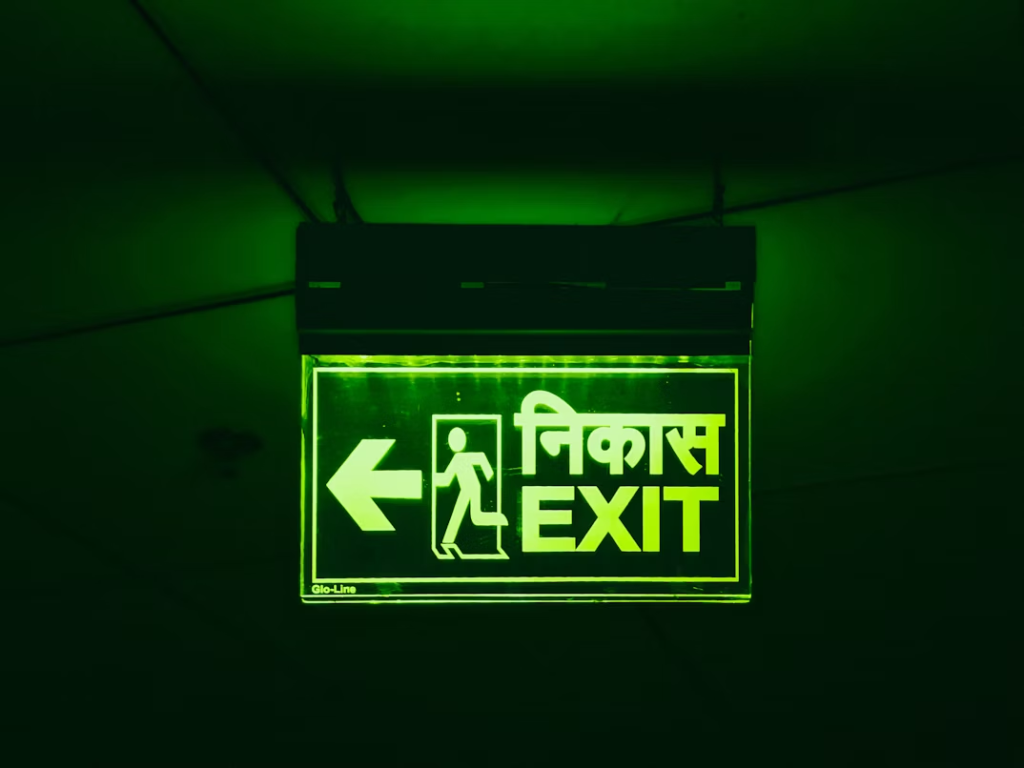
Exit signs are designed to mark exit doors clearly. These signs typically use illuminated symbols, such as an arrow or the word “EXIT,” to indicate the direction to safety. They are usually installed above or next to exit doors to help people find the nearest safe exit point.
Emergency Lighting
Emergency lighting provides illumination in corridors, stairwells, and other areas that might be used for evacuation. It ensures that people can see clearly and move quickly, even if the building’s regular lighting is out.
Emergency lights are strategically placed along escape routes to ensure visibility during an emergency.
Combined Exit and Emergency Lighting
Some buildings use combined exit and emergency lighting, where the exit signs also double as emergency lights. These systems are designed to save space while still providing the required safety functionality.
These dual-purpose systems are particularly useful in compact buildings where additional lighting space is limited.
How to Ensure Your Exit & Emergency Lighting Works Properly
Installing exit and emergency lighting is only part of the equation. Regular testing and maintenance are critical to ensuring that these systems function properly during an emergency. Here’s how to ensure your systems are working effectively:
Regular Testing
Under Australian standards, exit and emergency lighting systems must be tested regularly to ensure they are functioning correctly. This includes monthly visual inspections to ensure all exit signs and emergency lights are illuminated and free from obstructions or damage.
Every six months, a more thorough functional test must be performed to ensure that the lights stay on for the required duration, typically at least 90 minutes.
Annual inspections by a professional technician are also recommended to check for faults, damaged wiring, or other issues that may prevent the system from functioning correctly.
The testing process should also include verifying the battery life and checking the backup power systems to ensure they are capable of keeping the system running during power outages.
RCD Testing
As part of regular maintenance, it’s important to conduct RCD testing to ensure that the backup power supply for your exit and emergency lighting works properly in the event of a power failure.
The RCD test button is an easy-to-use feature that helps you perform a simple test, but for more comprehensive checks, a professional inspection is required. This ensures that the backup power systems, including the batteries, remain effective and functional.
Battery Maintenance
Emergency lighting systems rely on backup batteries to provide power when the main electricity supply fails.
Regular testing of these batteries is essential to ensure they will last for the required duration during an emergency. Batteries should be tested to verify their charge capacity and replaced promptly if they show signs of wear or failure.
Common Problems with Exit & Emergency Lighting Systems
While exit and emergency lighting systems are designed to be reliable, they can experience problems that prevent them from functioning correctly. Some common issues include burnt-out bulbs, faulty batteries, or disconnected circuits.
Over time, the components in these systems may wear out or malfunction, compromising their ability to provide light during an emergency.
Burnt-out bulbs are a common issue in exit and emergency lighting systems. These should be replaced regularly to ensure that the lighting system remains functional.
Faulty batteries, especially in older systems, can also lead to power failures when they are needed most. To avoid this, regular checks should be made to ensure batteries are properly charged and in good condition.
Disconnected circuits can occur due to wiring issues or physical damage to the system. If the wiring is not properly maintained, the lights may fail to operate during an emergency.
Inspections should focus on the integrity of the wiring and connections to ensure the system remains reliable.
How to Maintain Compliance with Safety Regulations
Compliance with Australian regulations, particularly AS 2293, is essential for ensuring the safety of all building occupants. Here’s how to maintain compliance:
Ensuring regular inspections and maintenance is crucial. Have a qualified technician inspect your emergency lighting systems regularly.
It’s important to test the backup power systems, ensuring the batteries and RCDs are in good condition and able to support the system during an emergency.
Document all maintenance activities to demonstrate compliance with safety standards and regulations.
Frequently Asked Questions
How often should exit and emergency lighting be tested?
Exit and emergency lighting should be visually inspected every month and undergo a functional test every six months. An annual inspection by a qualified professional is also recommended.
Can I perform exit and emergency lighting testing myself?
Basic visual inspections can be performed by property owners, but functional testing and full system checks should be done by qualified professionals to ensure compliance with Australian safety standards.
What should I do if my exit and emergency lighting system fails the test?
If the system fails the test, contact a qualified technician to inspect and repair the system. Faulty lights or batteries should be replaced promptly to ensure that the system is operational in case of an emergency.
Conclusion
Exit and emergency lighting are essential safety measures that ensure the safe evacuation of individuals during emergencies, particularly when normal lighting fails.
Regular testing, including checks of the backup power systems like RCDs, is necessary to ensure the system’s reliability and compliance with Australian standards.
With proper maintenance, you can ensure that your exit and emergency lighting systems are functional when they are needed the most, preventing unnecessary risks and enhancing overall safety.